TER Learn: A Developer Growth Platform for Embedded Rust
Embedded Rust learning material needs a solid ground to stand on. TER Learn is built for that purpose.
The question I get most often from readers & learners isn't about lifetimes or async. It's some version of "I followed this tutorial, and it doesn't compile."
Some Embedded Rust projects move fast. That's good for the ecosystem and hard on learners. A tutorial written for esp-hal in 2023 can be wrong in a dozen small ways today. Trouble often starts with the project template, then moves to things like a renamed module, a builder that changed shape, or a feature flag that no longer exists. A beginner can't tell whether the mistake is theirs or the tutorial's. Most of them assume it's theirs, and some quit.
In embedded, hardware used to be the reason beginners gave up. Software shouldn't become another one.
AI assistants help a lot here, and I use them every day. But they learned from that same mix of old and new code, so in such a fast-moving ecosystem, they can suggest an API that was right two releases ago. Without a way to check, a beginner can't tell which suggestion is current. Even worse, AI can give answers that build successfully, but don't operate correctly. That's why systems thinking matters more than ever: you have to know what the program should do to notice it doesn't.
AI doesn't replace the fundamentals. There is no doubt AI will accelerate the pace further. To keep up, learners need solid ground to stand on.
I wrote two books on embedded Rust, keep them updated, and know how much work that takes. The Embedded Rustacean (TER) Learn platform is that work turned into a system.
More than a Collection of Courses
TER Learn isn't a course site. It's a developer growth platform: a place to learn, practice, build, grow, and connect as an embedded Rust developer.
- Learn: structured courses and paths that start at the foundations of embedded development: systems thinking and requirements. Then they cover the layers you can build on: registers, bare-metal HALs, async with Embassy, and std. Each course shows the crate versions it teaches, and when a course changes, every complete program is recompiled. If one breaks, it doesn't ship.
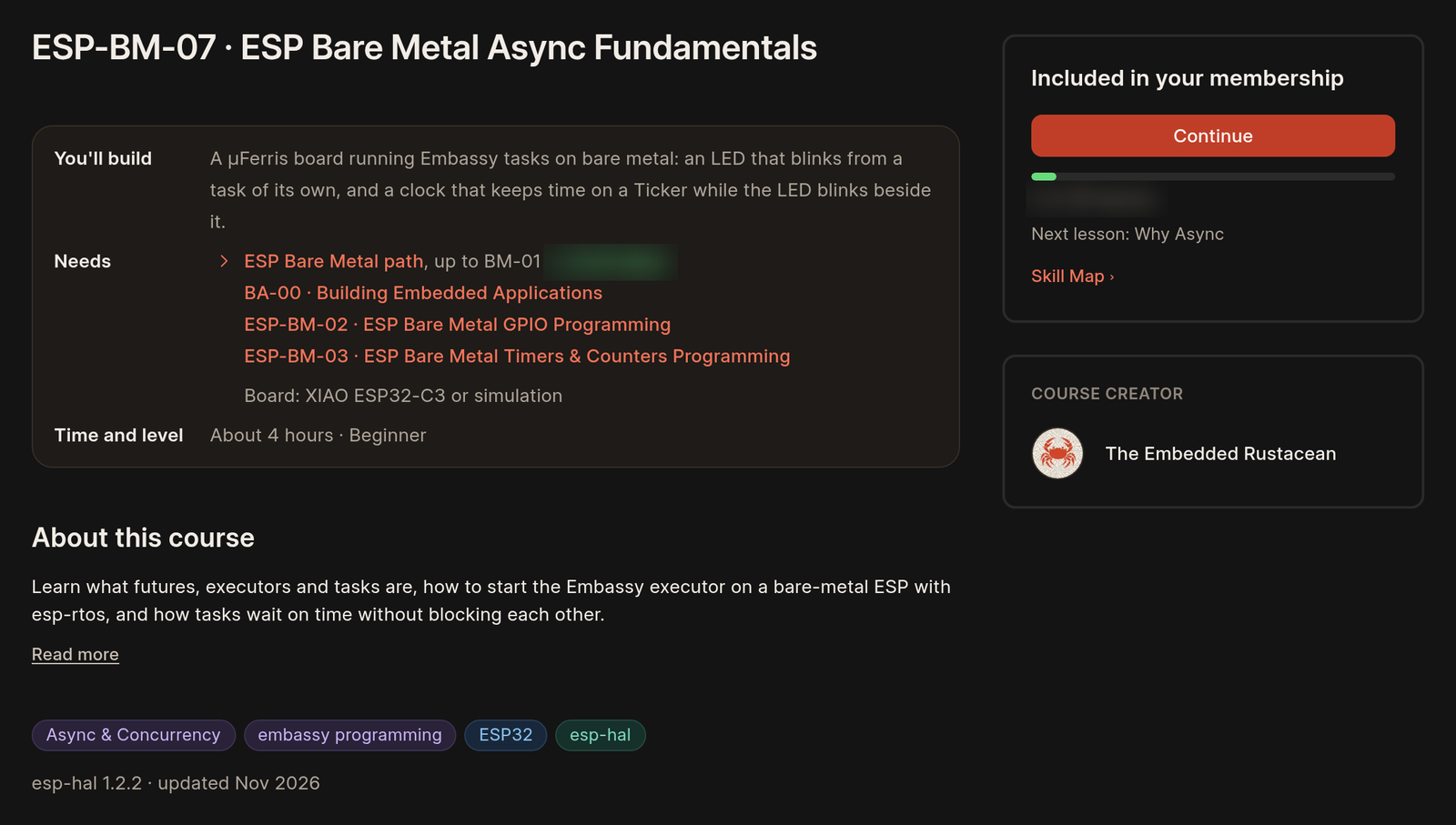
- Practice: you don't need hardware to start. Exercises and hands-on projects are checked in a headless simulation, and visual simulation runs locally when you want to see the circuit. Have a board? Even better. The same code runs on it unchanged.
- Build:
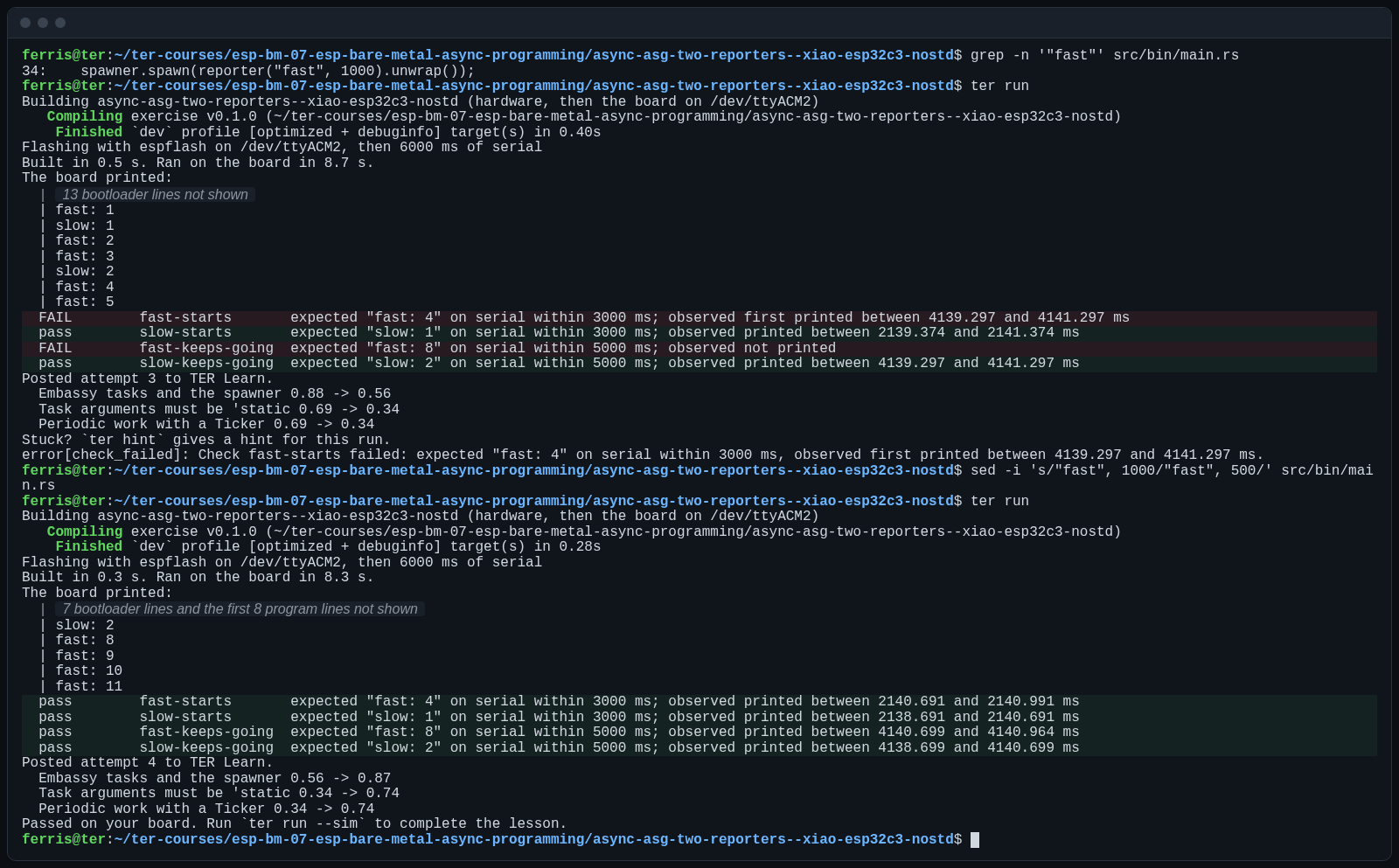
teris a CLI built for TER Learn, with everything a learner needs in one tool. It builds your code, runs it, and checks what the program actually does, not just that it compiles. If you use AI,ter hint --llmgives your own model the lesson, your run, and your files, so its hints point back to what you're learning.
- Grow: progression and concept mastery, not just a list of finished lessons.
- Connect: share your board with other learners (beta) and vote on the roadmap.
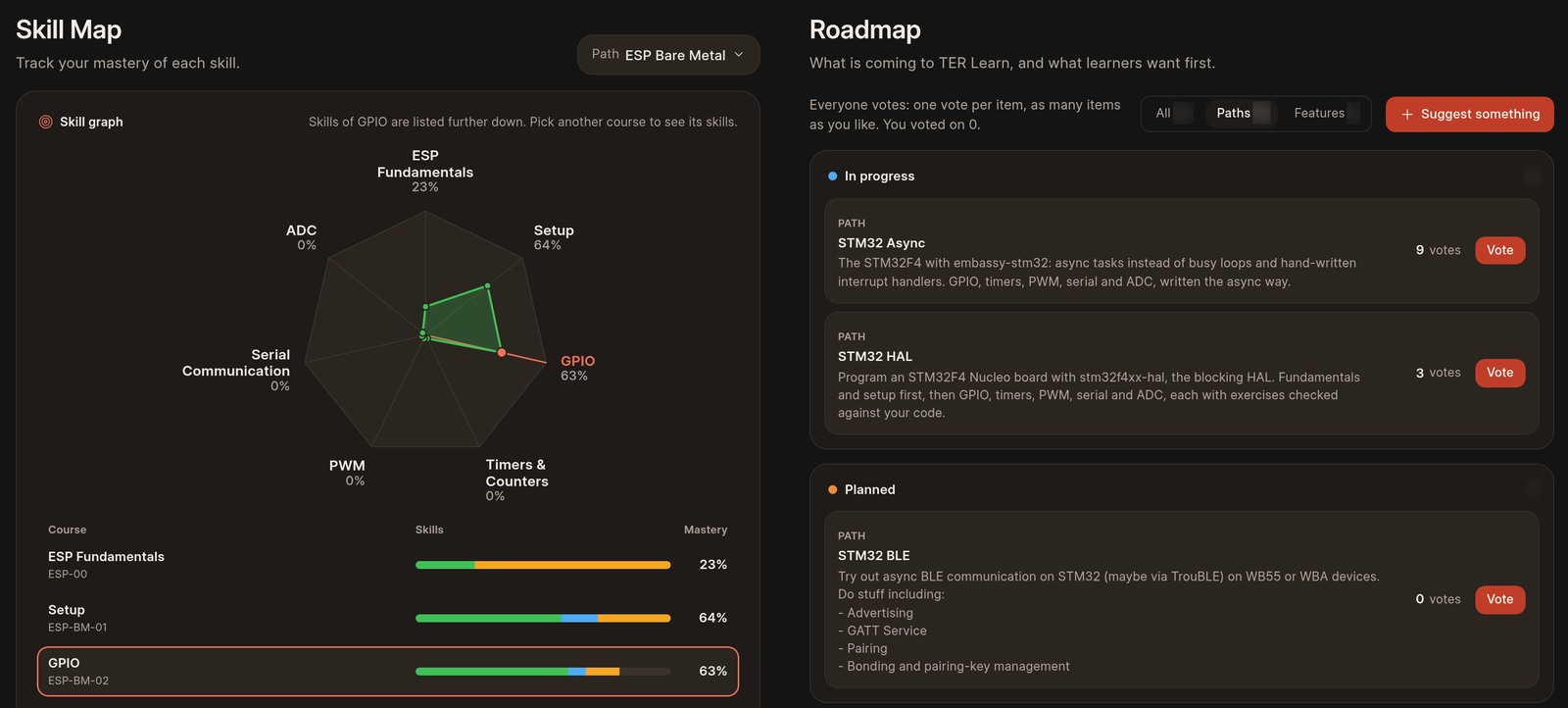
Newsletter readers have been using it since October, and their reports shaped a lot of it. From here on, members shape it directly: there's a roadmap inside TER Learn, and members vote on what gets built next.
Try It
TER Learn is open to everyone starting today. Subscribe to The Embedded Rustacean Newsletter for free, and your welcome email includes a 14-day trial of everything.
If you try it and something's missing, put it on the roadmap and vote for it. That's how the next thing gets built.
I built TER Learn for the version of me who started embedded Rust and kept hitting walls that weren't my fault.
P.S. Through Dec 1, Simplified Embedded Rust books are 50% off with code CYBER2026, and each copy comes with 30 days of TER Learn. Get the books here.
About the author
- I am an 📟 Embedded Engineer with years of experience in both industry 🏭 and academia 🏫. Passionate Mentor 👨💼 and Instructor 👨🏫. Rustacean 🦀